The Salt March
Dandi, Navsari
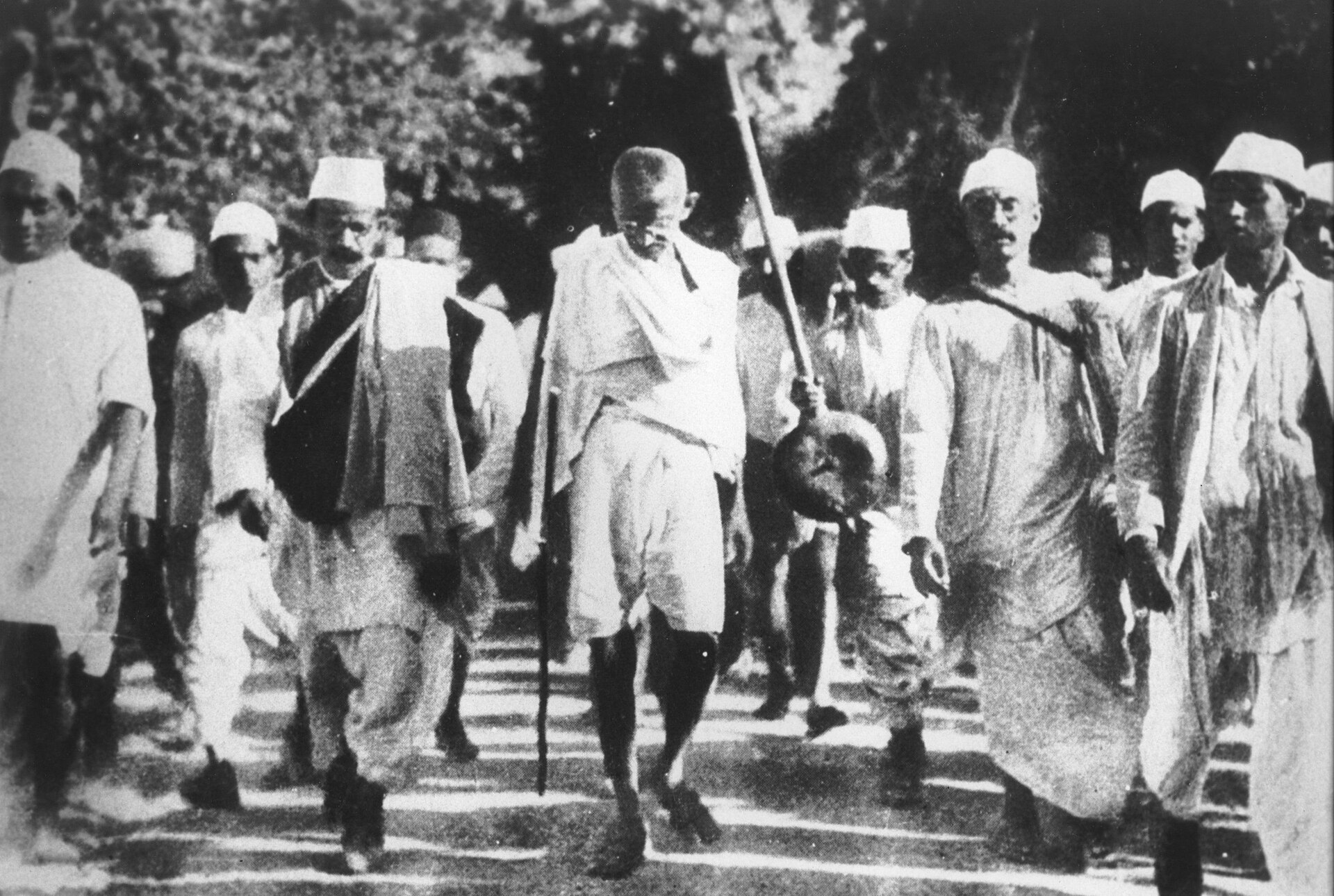
Gandhi and 78 marchers walk about 390 km from Sabarmati to Dandi and break the salt law on 6 April 1930, opening civil disobedience.
The Congress at Lahore had declared complete independence its goal on 31 December 1929. Gandhi chose the salt tax as the law to break, because it fell on everyone and salt lay free on the shore. He left Sabarmati Ashram on 12 March 1930 with 78 men, walked through the villages of Gujarat for 24 days, and reached Dandi on 5 April. On the morning of the 6th he picked up a lump of salt from the mudflats.
Across India people made salt, picketed liquor shops and burned foreign cloth, and tens of thousands were jailed, many of them women. In Peshawar on 23 April troops fired on a crowd in the Qissa Khwani bazaar, and two platoons of the Garhwal Rifles refused to be used against the protesters. Gandhi was arrested at Karadi near Dandi on the night of 4 May. On 21 May satyagrahis led by Sarojini Naidu walked in ranks at the Dharasana salt works and were clubbed down by police, and the American reporter Webb Miller's account went around the world.
The Gandhi–Irwin pact of 5 March 1931 ended the campaign and took Gandhi to the second Round Table Conference in London. The National Salt Satyagraha Memorial at Dandi opened in 2019.
- political
- colonial