The Great Famine of 1876 to 1878
Bellary, Madras Presidency
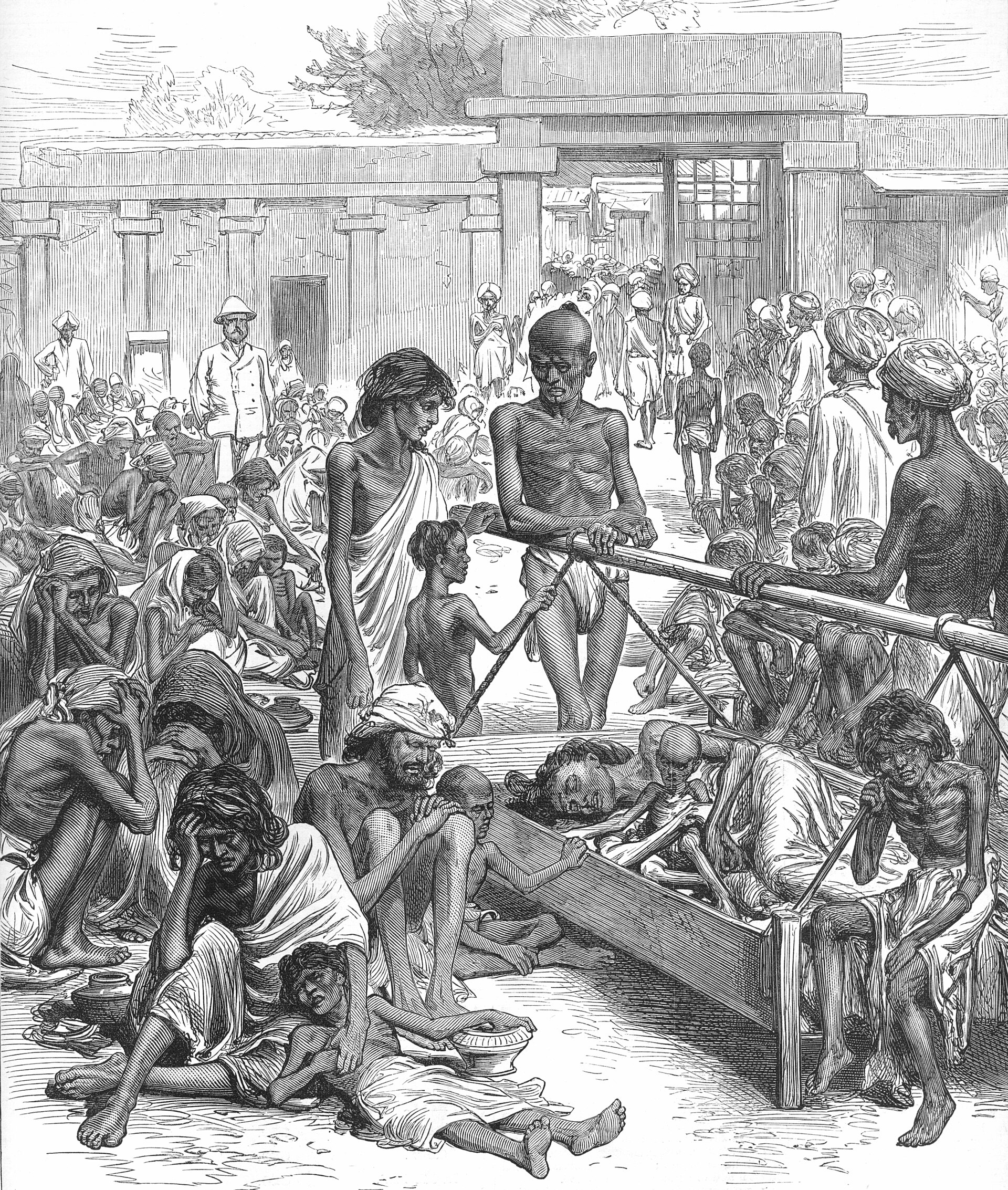
Drought across the Deccan and the south kills an estimated 5 to 10 million people; the 1880 Famine Commission leads to India's first famine codes.
The monsoon failed in 1876 over Madras, Bombay, Mysore and Hyderabad, and again in parts of the north the next year. Lytton's government held to free trade and economy. Grain kept moving out of famine districts by the new railways to where prices were higher, and Richard Temple, sent to direct relief, cut the ration on relief works to a pound of grain and an anna a day. William Cornish, Madras's sanitary commissioner, warned that the "Temple wage" was a starvation diet. On 1 January 1877, in the middle of the famine, Lytton held the Imperial Assemblage at Delhi to proclaim Victoria Empress of India.
The pin marks Bellary, one of the worst-hit districts of the Madras Presidency. The Famine Commission of 1880 under Richard Strachey recommended relief works paid at a living wage, early warning and a famine reserve, and its proposals became the provincial famine codes of the 1880s, the first rules in India binding the state to act in a famine.
The toll is an estimate, since most deaths went unregistered. The Famine Commission put excess deaths in British territory alone at 5.25 million for 1877 and 1878; the estimates for all of India that Mike Davis collects run from 6.1 to 10.3 million. How much of that was the drought and how much the policy is still argued: Davis puts the weight on doctrine and exports, others on the scale of the failure and the limits of transport.
- colonial
- political