Harappa and the end of the cities
Harappa, Sahiwal district, Punjab (Pakistan)
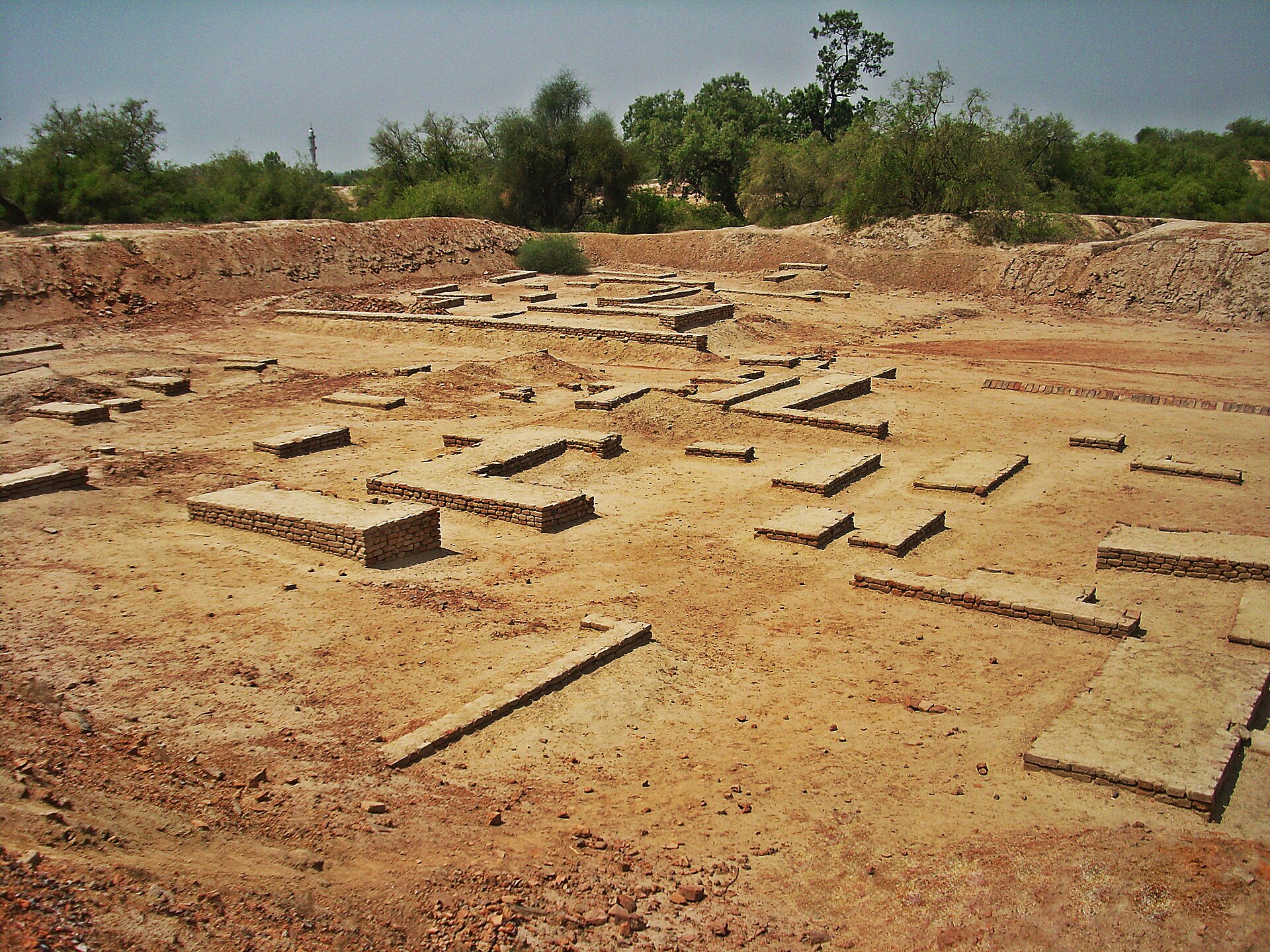
From about 1900 BCE the big Indus cities shrink and empty, and at Harappa a smaller settlement buries its dead in a new style, called Cemetery H.
Harappa, on an old course of the Ravi, was the first Indus city to be excavated, by Daya Ram Sahni in 1921, and gave the civilisation its name. After about 1900 BCE the standard weights, the seals and the script fall out of use there and across the Indus plain. Harappa shrinks, and its people bury their dead in a new style, some in painted urns, in the graveyard excavators called Cemetery H.
On the map the decline is a shift as much as an end: settlements multiply to the east, in Haryana and the upper Ganga-Yamuna doab, and in Gujarat, while Sindh and the Cholistan desert empty. The cause is contested. Mortimer Wheeler's picture of Aryan invaders sacking the cities has been abandoned for lack of evidence. Later explanations combine a weakening monsoon, rivers that shifted or dried, the Ghaggar-Hakra among them, and the loss of long-distance trade.
- state-formation
- trade