Non-cooperation, Khilafat and Chauri Chaura
Chauri Chaura, Gorakhpur
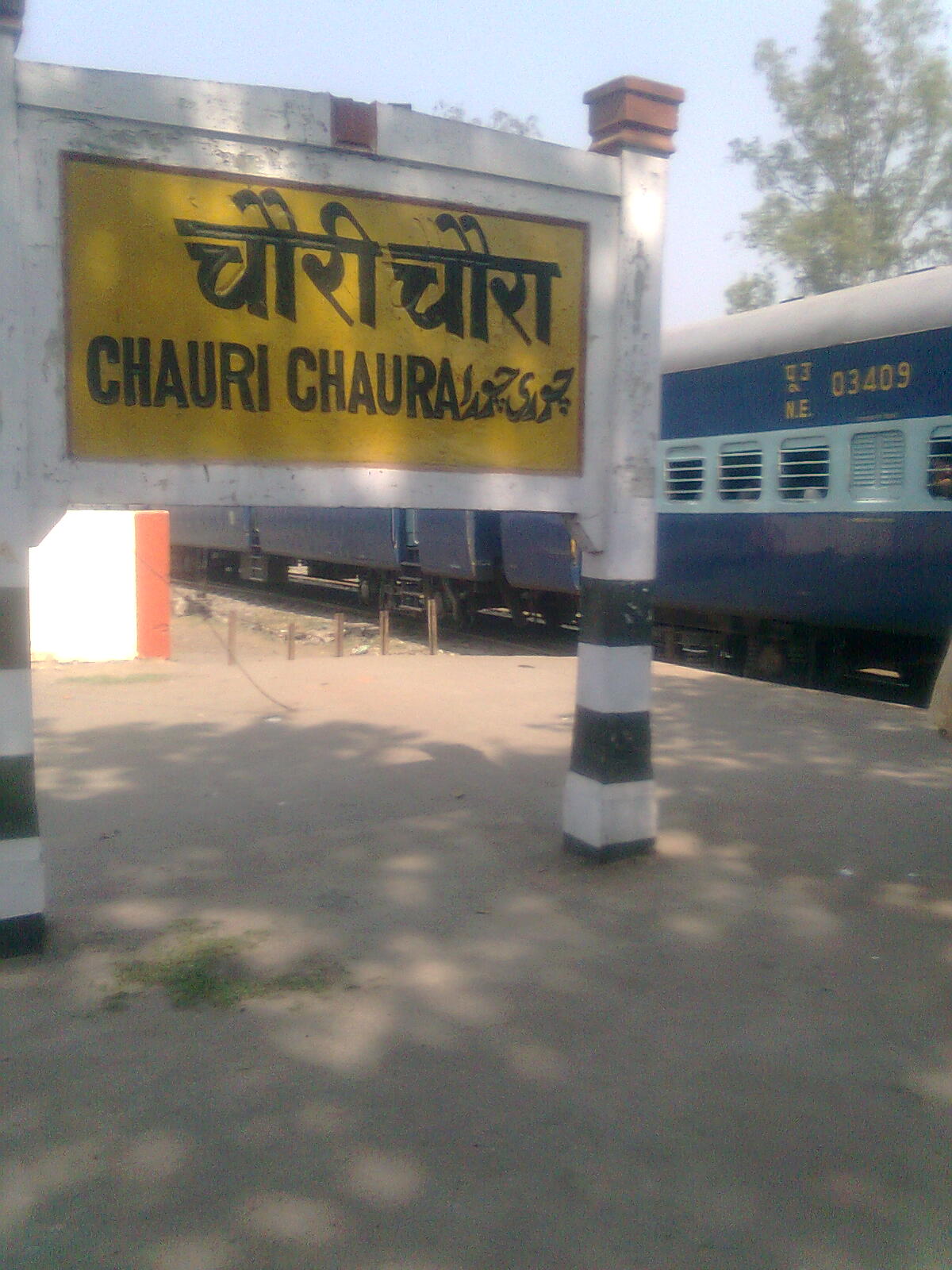
Congress and the Khilafat committees launch non-cooperation in 1920; after a crowd burns Chauri Chaura police station in 1922, Gandhi calls it off.
The Khilafat movement, led by Mohamed and Shaukat Ali, protested the Allies' treatment of the defeated Ottoman sultan, whom many Indian Muslims revered as caliph. Gandhi joined it to the Punjab wrongs and to swaraj, and the Congress adopted non-cooperation at Calcutta in September 1920 and Nagpur that December: boycott of the councils, courts, government schools and foreign cloth, which was burned in public bonfires. Tens of thousands went to jail, and the Congress became a mass party with branches down to the villages.
At Chauri Chaura on 4 February 1922 police fired on a procession of volunteers, and three of the crowd were killed. The crowd set the police station alight, and 22 policemen died. Gandhi suspended the movement on 12 February. He was arrested on 10 March and sentenced to six years. A sessions court sentenced 172 of the accused to death; on appeal the Allahabad High Court confirmed 19 of the sentences.
Many in the Congress, among them Motilal Nehru and Subhas Bose, thought the suspension a blunder that threw away the movement at its height. Shahid Amin's study shows how the official and nationalist memory of Chauri Chaura each left out the villagers' own account of the day.
- political
- religion