Painted Grey Ware villages of the doab
Hastinapur, Meerut district, Uttar Pradesh
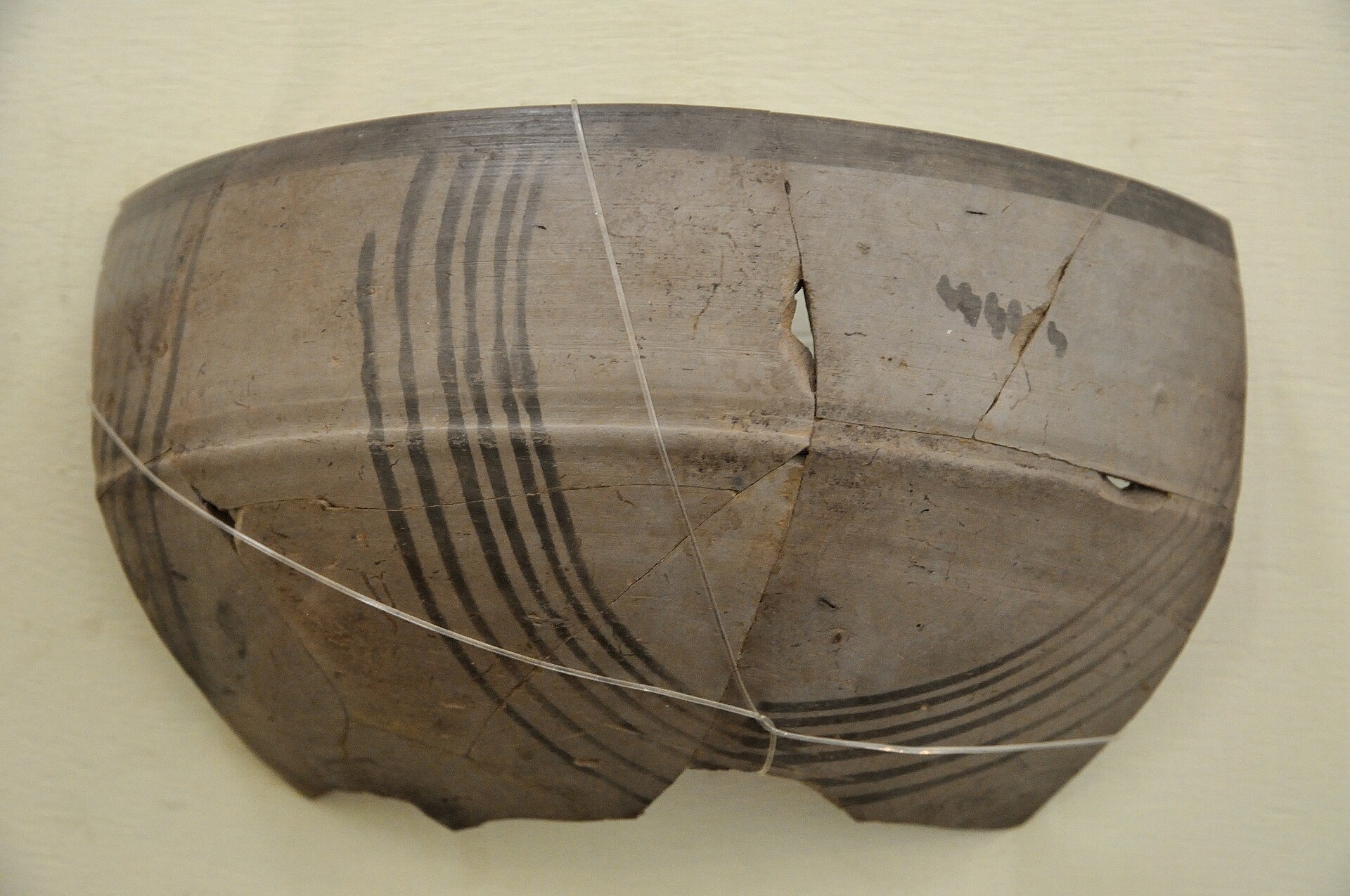
Fine grey pottery painted in black marks the farming villages of the later Vedic Ganga-Yamuna doab; Hastinapur is its key excavated site.
Painted Grey Ware was first noticed in the 1940s excavations at Ahichchhatra and defined by B. B. Lal's dig at Hastinapur in 1950-52. More than a thousand sites have been recorded, mostly small villages between the Sutlej and the middle Ganga, with rice and barley, cattle and horses, and at many of them iron tools. It is the archaeology of the later Vedic age, when the centre of the Vedic world moved east from the Punjab to the Kuru and Panchala lands.
Lal found that a Ganga flood had cut away part of the Painted Grey Ware settlement at Hastinapur and linked it to the Puranic statement that King Nichakshu moved his capital to Kaushambi after Hastinapura was washed away. That link, and the matching of these sites with the cities of the Mahabharata, belong to the tradition track. The range here comes from stratigraphy and radiocarbon, which place the ware between about 1200 and 600 BCE.
- state-formation