Aryabhata writes the Aryabhatiya
Kusumapura, identified with Pataliputra (Patna), Bihar
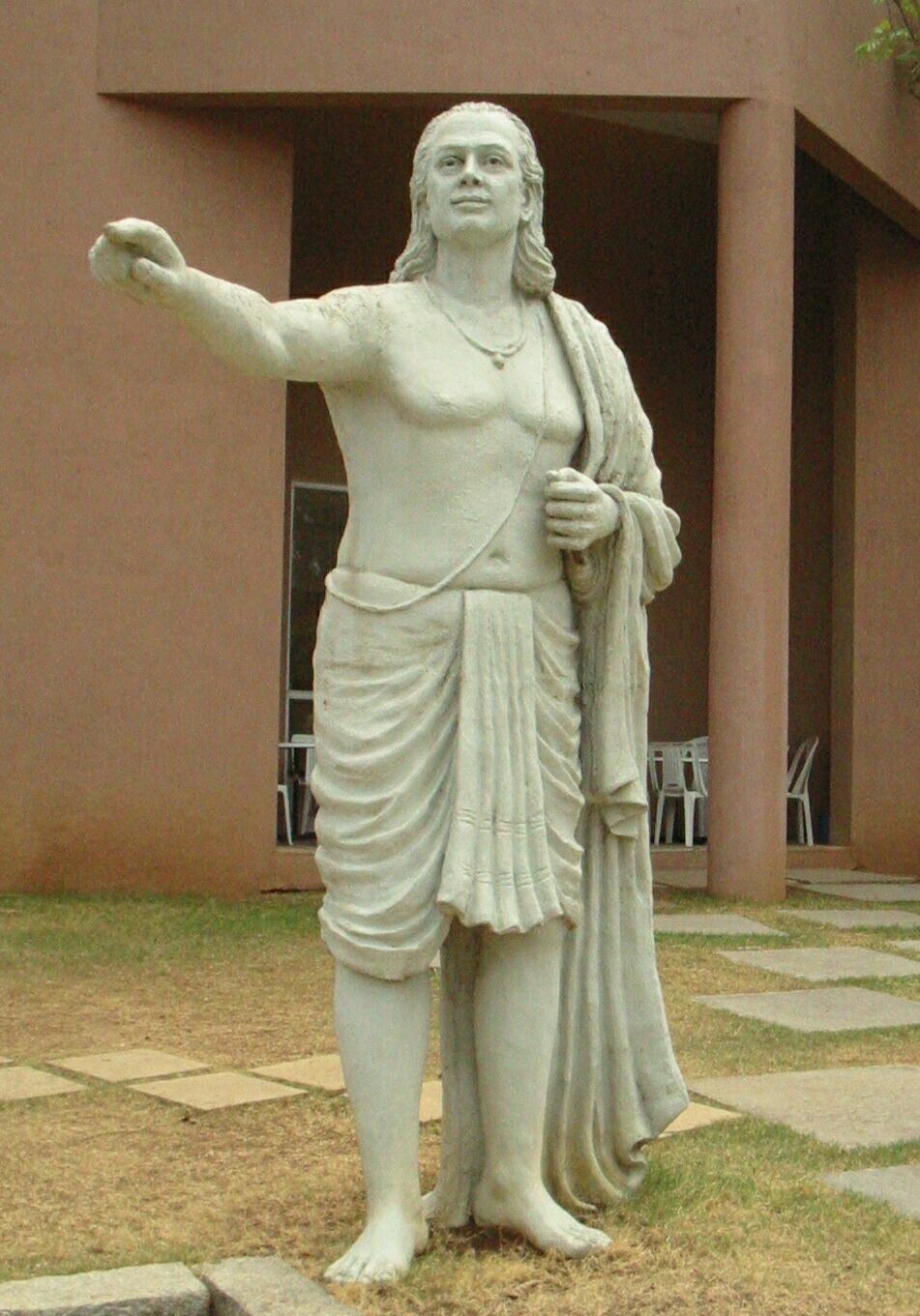
At twenty-three, Aryabhata completes a compact Sanskrit treatise on mathematics and astronomy, with a value of pi and a rotating Earth.
The Aryabhatiya dates itself: Aryabhata writes that he was twenty-three when 3,600 years of the Kali age had passed, which is 499 CE. In 121 verses it gives pi as 3.1416, a table of sines, a method for indeterminate equations, and an astronomy in which the Earth turns on its axis while the stars stand still. It sets out, it says, the knowledge honoured at Kusumapura, which the seventh-century commentator Bhaskara I identifies with Pataliputra.
Its methods were carried on by astronomers in Kerala for a thousand years and reached Arabic astronomy. Where Aryabhata was born is not known: Bhaskara calls him a man of Ashmaka in the Deccan, and Kerala also claims him. The modern notion that he headed Nalanda rests on no early evidence.
- science