Chapter 06 · 1526 to 1760 CE
The Mughals and their rivals
मुग़ल और उनके प्रतिद्वंद्वी
Babur came down from Kabul with matchlocks, field guns and Central Asian cavalry, and his descendants ruled from Kabul to the Deccan for the better part of two centuries. Akbar's administration, Shah Jahan's architecture and Aurangzeb's wars set the frame that the Marathas, the Sikh misls and the European trading companies would inherit.
The outline is the empire around 1700, its largest and most overstretched. Within fifty years the Marathas held the centre, the Nawabs ran Bengal and Awadh, and a trading company had an army.
Events in this chapter
1526 · Panipat, Haryana
First Battle of Panipat
Babur's field guns and flanking cavalry break Ibrahim Lodi's army; the Delhi Sultanate ends and the Mughal line begins.
1571 – 1585 · Fatehpur Sikri, Uttar Pradesh
Akbar's city at Fatehpur Sikri
Akbar's capital of 1571-85, where debates in the Ibadat Khana brought Sunni and Shia scholars, Brahmins, Jains and Jesuits before him.
1613 · Surat, Gujarat
The English factory at Surat
After an English victory over the Portuguese off Swally, Jahangir confirms the East India Company's right to trade at Surat.
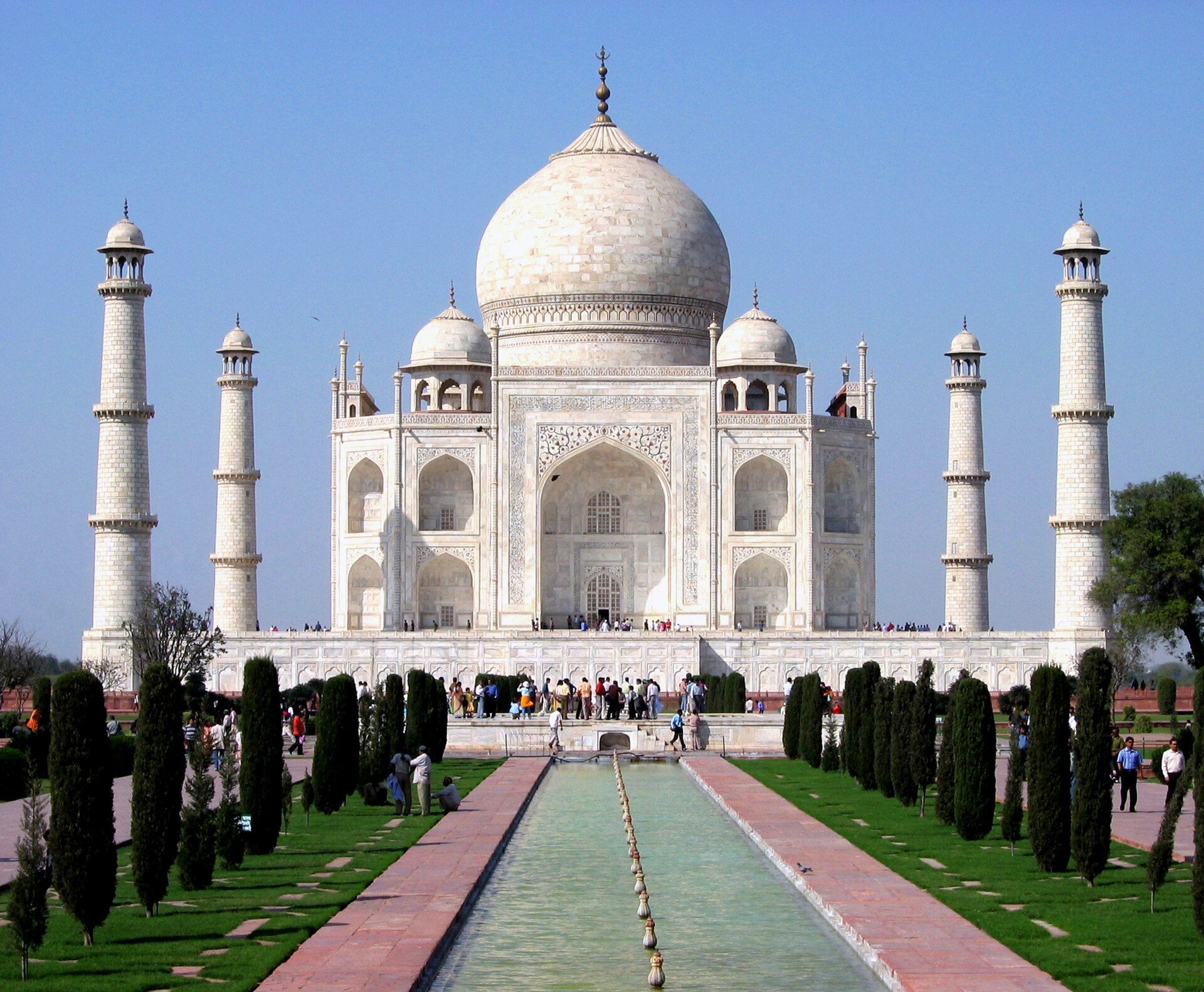
1632 – 1653 · Taj Mahal, Agra, Uttar Pradesh
Shah Jahan builds the Taj Mahal
Shah Jahan's tomb for Mumtaz Mahal, built over two decades on the Yamuna in white Makrana marble.
1674 · Raigad Fort, Maharashtra
Shivaji crowned at Raigad
Shivaji is crowned Chhatrapati at Raigad, making his Maratha state a sovereign kingdom outside the Mughal order.
1687 · Golconda Fort, Hyderabad, Telangana
Aurangzeb takes Golconda
After an eight-month siege the last Deccan sultanate falls to Aurangzeb, carrying the empire close to its greatest extent.
1699 · Anandpur Sahib, Punjab
Guru Gobind Singh founds the Khalsa
At Vaisakhi the tenth Guru initiates the Panj Piare and gives the Sikh community its martial, egalitarian form.
1757 · Plassey battlefield, near Palashi, West Bengal
Battle of Plassey
Clive's Company army defeats Siraj ud-Daulah when Mir Jafar's troops stand aside; the Company becomes the power behind Bengal's throne.